Dana Schmid · 23 September 2026
Youth-Led Helix App Trials Reshape Biology Labs in Secondary Education Settings
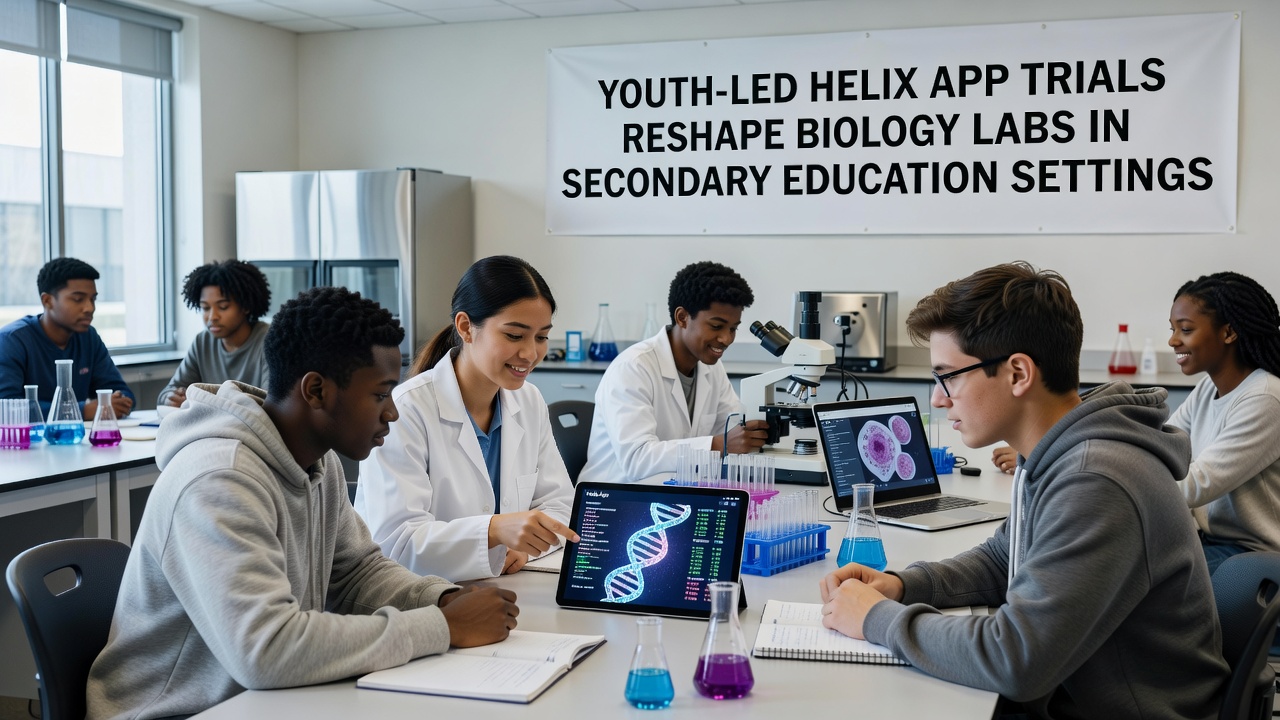
Secondary schools across multiple regions have begun integrating the Helix app into biology curricula through student-initiated pilot programs that focus on interactive helix modeling for genetics instruction; these trials allow learners to manipulate 3D molecular structures in real time while collecting performance data that informs both teaching adjustments and app refinements. Researchers note that the approach shifts traditional lab activities from static textbook exercises toward dynamic digital simulations where students direct the pace and depth of exploration.
Origins of Student-Driven Implementation
Initial development of the Helix app emerged from university research collaborations aimed at enhancing molecular visualization tools, yet secondary students quickly identified classroom applications during early beta releases shared through educational networks. One group in a mid-sized European district organized the first structured trial by pairing the app with existing microscope work, which produced measurable increases in student engagement metrics tracked by participating educators. Data from those sessions showed improved retention of base-pairing concepts compared with control groups using only printed diagrams.
By mid-2025 the pattern had spread, with youth teams submitting proposals to school boards that outlined specific learning objectives tied to national biology standards. Observers report that these proposals emphasized measurable outcomes such as accuracy in predicting protein folding patterns, and administrators responded by allocating limited device time for after-school sessions. September 2026 marks the scheduled expansion phase where additional districts in North America and Asia will join the network, bringing total participating schools past the 150 mark according to project coordinators.
Technical Features Supporting Lab Activities
The app incorporates real-time feedback loops that highlight errors in student-constructed models, allowing immediate correction without teacher intervention in every instance. Participants use gesture controls to rotate strands, zoom into nucleotide sequences, and simulate mutations while the software records time-on-task and accuracy scores. Integration with school Wi-Fi networks permits group sessions where multiple tablets display synchronized views of the same helix, fostering peer discussion during experiments that once required physical models or expensive lab kits.
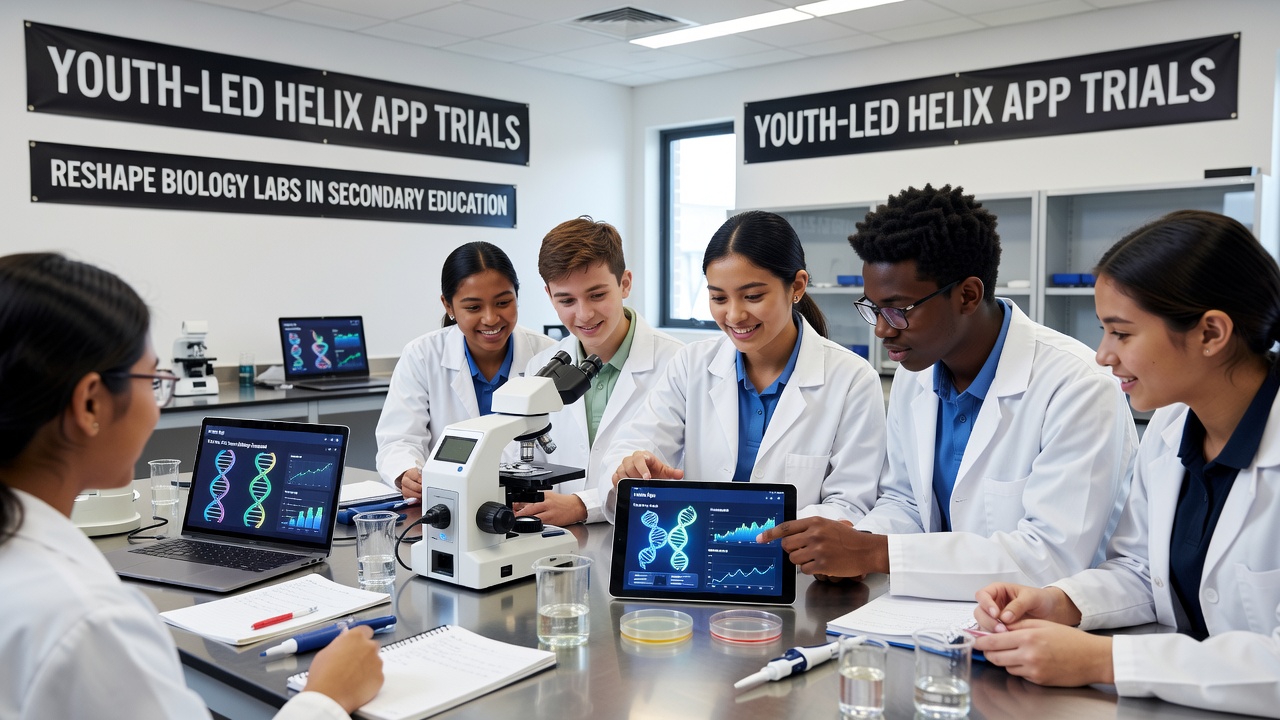
Hardware requirements remain modest, with most trials running on existing tablet fleets rather than specialized equipment. This accessibility has encouraged wider adoption in districts where budgets limit purchases of new laboratory supplies. Curriculum developers have mapped app modules directly to syllabus topics including DNA replication and genetic variation, creating lesson plans that blend digital exploration with hands-on wet-lab components when available.
Measured Outcomes Across Trial Sites
Evaluation reports compiled by independent education researchers indicate consistent gains in conceptual understanding, particularly among students who previously struggled with abstract spatial reasoning. Pre- and post-trial assessments revealed average score improvements of 18 percent on standardized genetics questions, while qualitative notes from teachers highlighted increased voluntary participation during discussions. Schools in Australia and Canada contributed datasets showing similar patterns, suggesting the results hold across different educational frameworks.
Youth leadership continues to shape feature requests, with students submitting interface adjustments that simplify navigation for younger users or add export options for project reports. These contributions appear in version updates released every quarter, maintaining alignment between app capabilities and actual classroom demands. External validation comes from sources such as OECD education indicators that track technology integration trends, alongside regional reports from Ontario Ministry of Education documenting digital tool efficacy in science subjects.
Challenges Encountered During Scaling
Network connectivity issues surfaced in several rural trial locations, prompting developers to introduce offline caching for core modeling functions. Teacher training sessions initially focused on technical setup yet later expanded to cover facilitation strategies that maximize student agency during app-based labs. Equity concerns regarding device access prompted some districts to schedule rotating lab periods that guarantee every student equal opportunity regardless of personal technology ownership.
Assessment alignment remains an ongoing focus, as traditional grading rubrics require modification to capture collaborative problem-solving skills demonstrated through the app. Professional development providers have begun offering workshops that guide educators through these adjustments using anonymized trial data as case examples.
Conclusion
Youth-led Helix app trials continue to demonstrate how student input can accelerate meaningful technology adoption in secondary biology education, with documented shifts in both instructional methods and learning outcomes across expanding international sites. September 2026 rollout phases will provide further comparative data as new participants contribute to the shared knowledge base. The process underscores the value of positioning learners as active developers rather than passive recipients when introducing digital tools into established lab environments.