Ben Müller · 4 November 2026
Poland Rolls Out Helix Simulations as Standard Tools in Biology Lessons
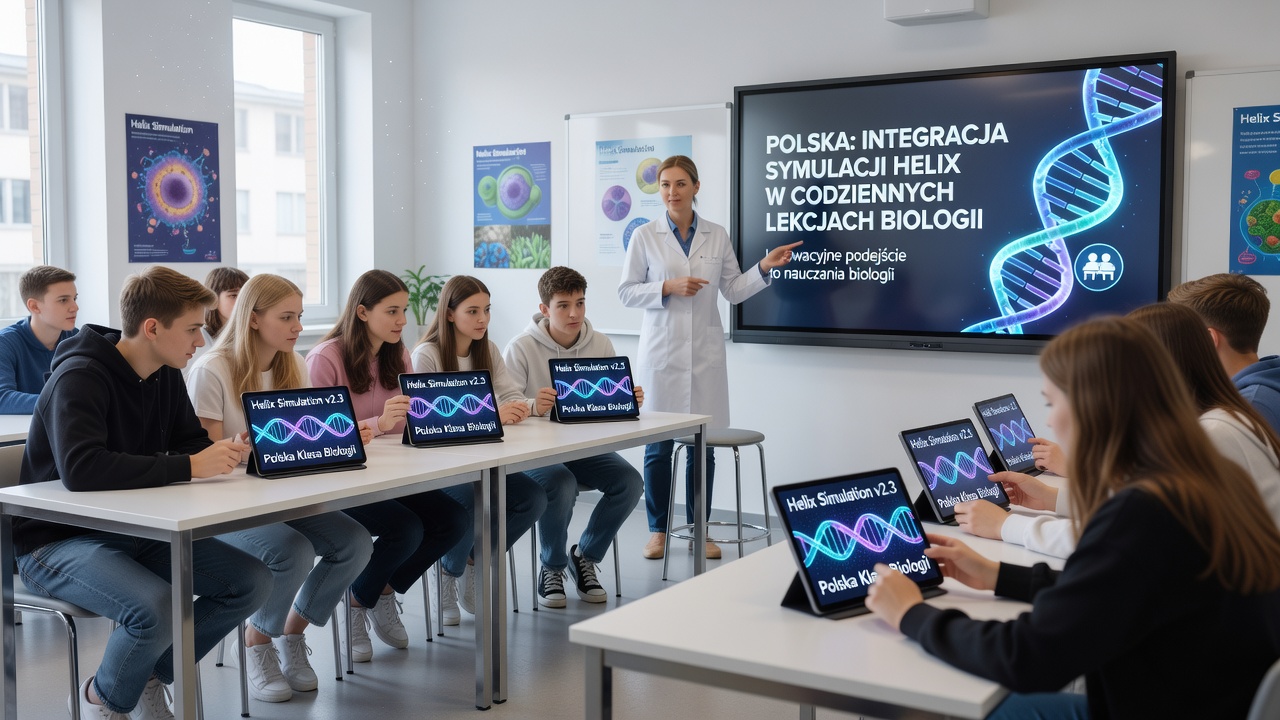
Polish education authorities have accelerated efforts to embed helix simulations directly into everyday biology instruction, moving these digital tools from occasional experiments to routine classroom resources across multiple regions. The approach centers on interactive molecular modeling that lets students manipulate DNA structures and protein interactions in real time, and it aligns with updates to the national science curriculum that took effect in 2024. Schools in Warsaw, Gdansk, and Wroclaw now schedule weekly sessions where classes use the simulations to explore genetics concepts that previously relied on static diagrams or textbook descriptions.
Background on the Integration Drive
Helix simulations refer to software platforms that recreate three-dimensional molecular dynamics, allowing users to adjust variables such as temperature, pH levels, and binding sites to observe outcomes. Researchers at several Polish technical universities developed core modules for these tools over the past five years, and the Ministry of Education and Science coordinated pilot testing in 25 secondary schools during the 2023-2024 academic year. Results from those trials showed measurable gains in student comprehension of replication processes, according to internal assessment reports shared with regional education offices.
Funding streams from both national and European Union programs support teacher training workshops that run throughout the school year. Participants learn to align simulation activities with specific learning outcomes listed in the core curriculum, and they receive lesson templates that combine short simulation exercises with follow-up discussions and lab reports. By late 2025, more than 1,200 biology instructors had completed the certification modules offered through regional teacher development centers.
Classroom Implementation Patterns
Teachers typically introduce a new helix simulation at the start of a genetics unit, then return to the same platform when covering related topics such as mutation effects or enzyme kinetics. Students work in pairs at laptops or tablets, rotating roles between operator and observer so each person gains hands-on experience. One common sequence begins with a guided walkthrough of base-pair bonding, followed by an open-ended task where learners predict how a single nucleotide change alters the resulting protein shape. Assessment rubrics focus on the accuracy of student predictions rather than speed of navigation through the interface.
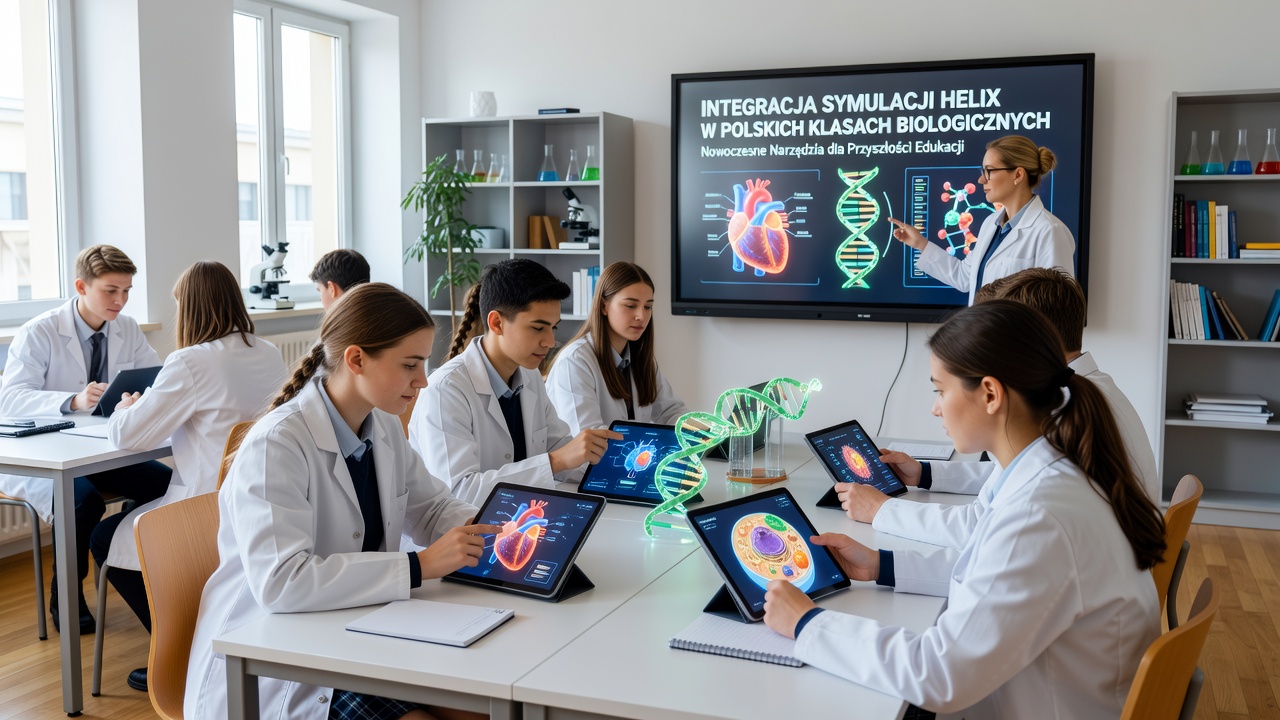
Regional coordinators track usage data through a centralized dashboard that records session length and completion rates. Figures from the first half of 2025 indicate average weekly usage of 45 minutes per class across participating schools, with higher engagement recorded in urban districts that already possessed reliable high-speed internet. Rural schools receive additional hardware grants to close access gaps, and mobile versions of the simulation software allow offline practice when connectivity drops.
Teacher Preparation and Resource Development
Professional development programs emphasize both technical operation and pedagogical integration. Sessions last two days and include live demonstrations, peer feedback rounds, and planning time for adapting activities to different grade levels. Materials developed by the national curriculum authority include video tutorials, printable worksheets, and extension challenges for advanced learners. Several universities have begun offering elective courses within biology teacher training degrees that focus specifically on simulation-based instruction methods.
November 2026 marks the scheduled nationwide rollout deadline, when all secondary schools are expected to have at least one certified instructor and sufficient device access for regular use. Preliminary registrations show that over 70 percent of schools have already met the hardware threshold, while the remaining institutions continue to receive targeted support through municipal budgets.
Supporting Evidence and External Benchmarks
Comparative studies conducted by the Polish Academy of Sciences compare simulation users with control groups that rely solely on traditional methods. Early data indicate stronger performance on standardized test items that require visualization of molecular processes. The European Education and Culture Executive Agency has cited the Polish model in a recent policy brief on digital science education, noting parallels with programs in the Netherlands and Finland that also prioritize interactive modeling. Observers note that the Polish initiative benefits from a centralized curriculum that reduces variation across districts, whereas more decentralized systems often face uneven adoption rates.
Industry partners supply updated simulation libraries at no direct cost to schools under agreements that run through 2028. These updates incorporate new research findings on gene editing techniques and epigenetic markers, keeping the classroom tools current with laboratory advances.
Conclusion
Poland continues to expand access to helix simulations as core components of biology education, with infrastructure upgrades, teacher training, and curriculum alignment all progressing toward full implementation by November 2026. The coordinated approach relies on existing national structures while drawing on European funding and research benchmarks to maintain consistency across regions. Ongoing monitoring through usage dashboards and assessment data will shape refinements in the years ahead.