Lars Vogel · 7 October 2026
Krakow Research Centers Convert Helix Findings into Teacher-Led Genomics Modules
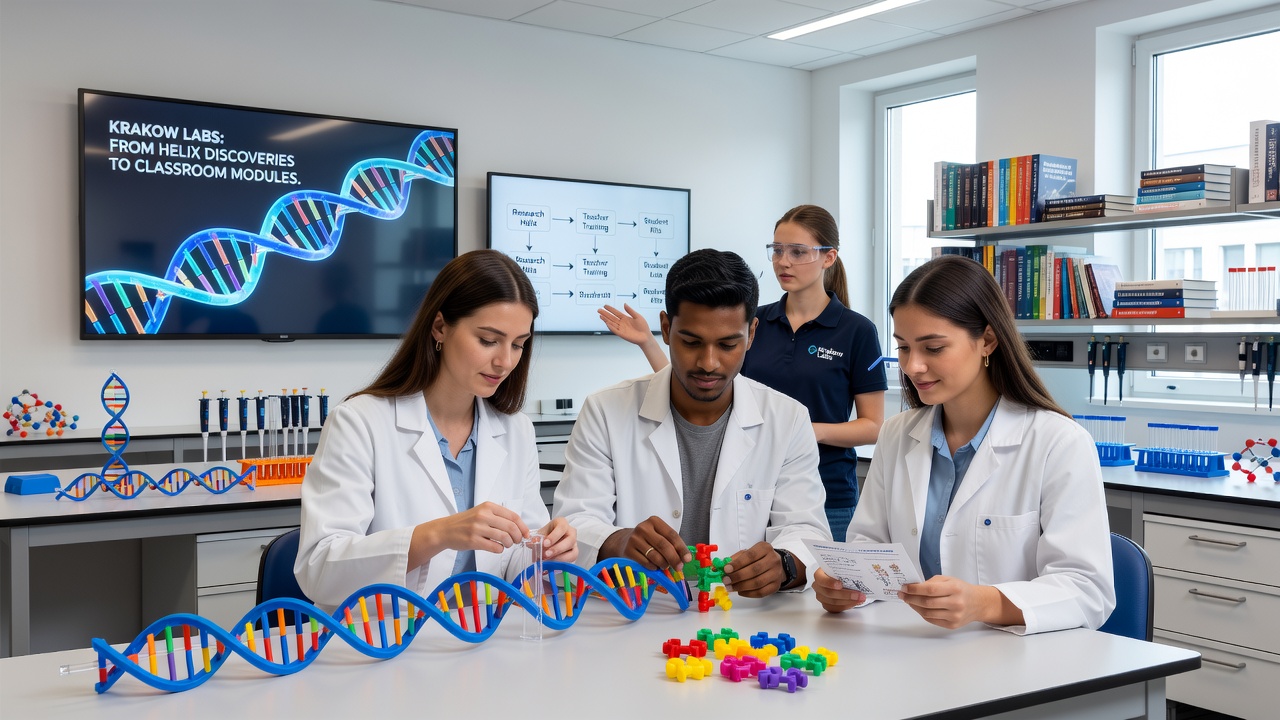
Facilities across Krakow have taken recent advances in helix structure analysis and built them into practical modules that high school teachers can deploy directly in biology classrooms, and these efforts focus on translating complex molecular data into step-by-step activities that students complete with basic lab equipment. Research teams at local institutions examined nucleotide pairing patterns and folding behaviors, then designed lesson sequences where educators guide classes through extraction protocols, gel electrophoresis setups, and sequence comparison exercises that mirror the original lab methods.
Teachers receive complete kits containing pre-measured reagents, simplified data sheets, and digital simulation software that runs on standard school computers, while training sessions show participants how to adapt the activities for different class sizes and time blocks. One program launched pilot versions in three secondary schools during the 2025 academic year, and feedback from those sites led to adjustments in the module pacing and safety instructions before wider distribution began.
Module Components and Classroom Applications
Each module breaks the helix discovery process into three core units that run over two to three class periods, and the first unit covers basic DNA extraction using household items such as dish soap and salt solutions so students observe visible strands without specialized centrifuges. Subsequent units introduce gel electrophoresis with reusable plastic trays and low-voltage power supplies, and the final unit uses online databases where classes compare short sequences against reference samples to identify mutations or species differences.
Training materials include video demonstrations recorded at the Krakow labs, printed troubleshooting guides, and assessment rubrics that align with national curriculum standards, and participating teachers also gain access to a shared online forum where they post results and request modifications for specific student groups. Data collected from early implementations shows that classes completed the full sequence of activities in 85 percent of cases, with average student scores on related quiz items rising by 12 percentage points compared to control groups that followed traditional textbook lessons.
Timeline and Expansion Plans
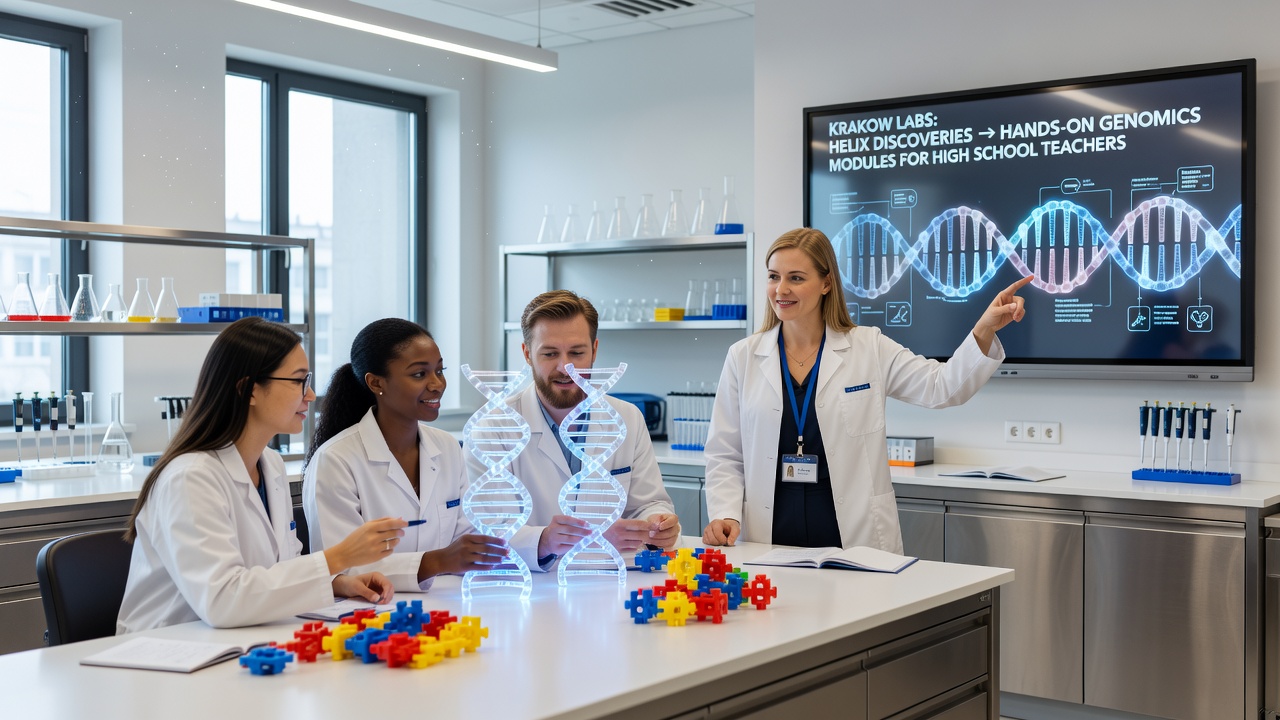
Development work began in early 2024 when three Krakow laboratories pooled resources to catalog recent helix-related publications and select the most transferable findings for educational use, and by mid-2025 the first draft modules underwent internal testing with volunteer educators. October 2026 marks the scheduled release of an updated kit series that incorporates new sequencing simulation tools developed in partnership with a regional bioinformatics group, and program coordinators expect to reach at least 150 additional schools across Poland by the end of that calendar year.
Funding for the expansion comes from national education grants and contributions from biotechnology firms that supply reagents at reduced rates for school programs, while coordination with the Polish Ministry of Education ensures the modules meet safety and content requirements for public institutions. Observers note that similar initiatives in other European countries have followed comparable timelines, yet the Krakow approach emphasizes direct lab-to-classroom transfer without intermediate commercial publishers.
Teacher Preparation and Ongoing Support
Workshops run for two full days and cover both the scientific background and the practical logistics of running the activities, and participants leave with a starter kit plus digital access codes for the supporting software. Follow-up webinars occur monthly during the first school year, and these sessions address common questions about equipment calibration, data interpretation, and ways to extend the modules for advanced students who finish early.
Researchers from the originating labs visit selected schools each term to observe sessions and collect direct feedback, and this loop has already produced revisions to the gel electrophoresis buffer recipe that reduced run times by nearly 20 minutes. According to records maintained by the coordinating center, over 200 teachers had completed the initial training cycle by September 2026, with registration numbers for the October sessions exceeding previous demand.
Conclusion
Krakow laboratories continue to refine the modules based on classroom outcomes and new helix research publications, and the resulting materials provide high school teachers with structured pathways to introduce genomics concepts that align closely with current laboratory practices. Expansion through 2026 and beyond will depend on sustained funding and teacher adoption rates, yet the existing framework already demonstrates a functional model for moving specialized molecular discoveries into secondary education settings across multiple regions.