Lars Vogel · 21 October 2026
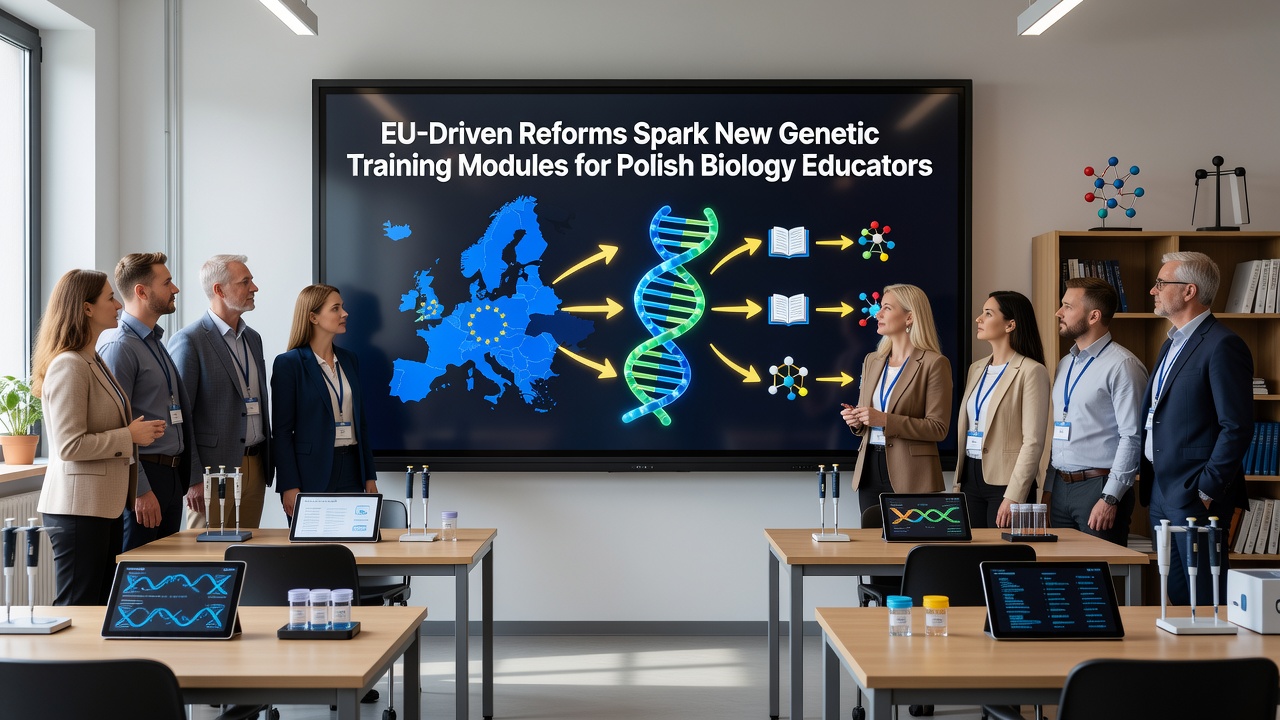
EU-Driven Reforms Spark New Genetic Training Modules for Polish Biology Educators
European Union policy updates have prompted the creation of specialized genetic training modules designed specifically for biology teachers across Poland, and these programs integrate the latest advancements in genomics education while aligning national curricula with broader EU standards. Data from the European Commission's education initiatives shows increased emphasis on molecular biology skills in member states since the adoption of the 2023 Digital Education Action Plan updates, and Polish institutions responded by rolling out targeted professional development starting in October 2026.
Policy Shifts Behind the Curriculum Changes
Reforms under the EU's updated framework for science education require member countries to incorporate practical genomics components into secondary school programs, and this directive stems from reports issued by the European Molecular Biology Laboratory that highlight gaps in teacher preparedness for topics like gene editing and personalized medicine. Polish education authorities coordinated with regional universities to develop modules covering CRISPR applications, DNA sequencing techniques, and ethical considerations in genetic research, while data from the Polish Ministry of National Education indicates over 1,200 biology instructors registered for the initial sessions by late 2026.
Module Structure and Content Focus
Each training module spans eight weeks and combines online simulations with in-person laboratory sessions, and participants explore case studies drawn from current European research projects funded through Horizon Europe grants. The curriculum emphasizes hands-on exercises using affordable portable sequencers, and trainers demonstrate methods for integrating these tools into existing classroom experiments without requiring major budget increases. Observers note that the modules also address data privacy regulations tied to genetic information, which aligns with EU GDPR provisions applied to educational settings.
Regional Rollout Across Polish Institutions
Training centers in Warsaw, Wrocław, and Gdańsk launched the first cohorts in October 2026, and subsequent phases extended access to educators in smaller municipalities through hybrid delivery formats. Partnerships between the University of Warsaw's Faculty of Biology and local teacher associations facilitated the distribution of open-access resources, and preliminary evaluations show participants gaining proficiency in designing lessons on Mendelian inheritance updated with modern genomic examples. Figures from the Polish Academy of Sciences reveal that similar collaborations have previously supported curriculum alignment in physics and chemistry education, and genetics follows the same pattern.

One study conducted by researchers at Jagiellonian University tracked early adopters and found measurable increases in student engagement when teachers applied the new modules, while comparative data from non-participating schools showed slower integration of these topics. The approach draws on models used in Canadian science education programs, where provincial governments introduced parallel genomics modules several years earlier.
Support Mechanisms and Resource Allocation
Funding streams allocated through EU cohesion policy instruments cover equipment purchases and instructor stipends, and Polish regional governments supplement these with national grants focused on STEM workforce development. Teachers receive access to shared digital platforms hosting lesson plans and virtual labs, and these tools connect directly to databases maintained by the European Bioinformatics Institute. What's interesting is how the modules incorporate feedback loops, allowing educators to report classroom outcomes that inform subsequent revisions scheduled for 2028.
Challenges Encountered During Early Implementation
Logistical hurdles included aligning schedules across multiple school districts and ensuring consistent access to laboratory space, and program coordinators addressed these by establishing mobile training units that visit rural areas on a rotating basis. Data indicates that 85 percent of participants completed the certification requirements within the first three months, and follow-up surveys conducted by independent evaluators highlight sustained use of the materials in daily instruction. Yet some schools report needing additional time to adapt assessment methods to include genetic analysis components.
Broader Educational Outcomes Observed
Early indicators suggest the modules contribute to higher enrollment in advanced biology electives at the secondary level, and national assessment scores in related subjects reflect incremental gains in the districts where training occurred first. Collaboration with industry partners provides students exposure to career pathways in biotechnology, and this element mirrors strategies employed in Australian vocational programs that link genomics education to workforce needs. Researchers continue to monitor long-term effects through longitudinal studies coordinated by the EU's Joint Research Centre.
Conclusion
EU-driven reforms have directly influenced the design and delivery of genetic training modules for Polish biology educators, and the October 2026 implementation marks a measurable step toward standardized genomics instruction across the country. Ongoing evaluations will determine how these changes affect student outcomes and teacher confidence over the coming years, while connections to European research networks continue to supply updated content for future iterations.